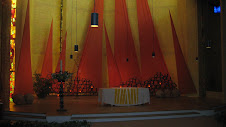
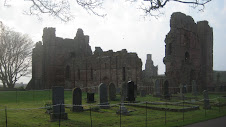
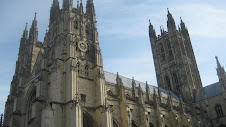
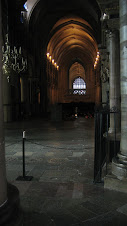
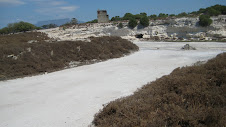
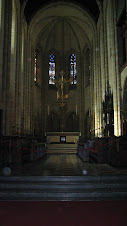
Welcome to my blog! It's a collection of pictures I've taken and thoughts that have come to me since I began my sabbatical wandering. There's no specific theme other than my desire to experience the spirituality of different cultures and places. I welcome your comments and conversation. It's a wonderful trip for me and I thank you for sharing it.

Friday, 27 March 2009

"I will blot out your sins..." (Isaiah 43:25)


This quote from Isaiah is given by God to the people of Israel as assurance that they will be forgiven. It has the sense of a slate being wiped clean and is especially familiar in Lenten readings. This quote came to my mind in a very different way as I walked around the Cathedral of St. George in Grahamstown where I preached and for whom I led workshops on healing.

Typical of English style Cathedrals, memorials line the walls extolling the virtues and accomplishments of those they remember. One plaque was in memory of a verger who after decades of service dropped dead in the aisle. The brass plaque gave him the credit such service merited and lauded him even as he “entered glory not far from this spot.”

Many of the memorials are for young men killed in the various wars and battles between the English and Xhosa people in the 1800’s. Curiously, marble strips have been placed on the plaques blanking out references to that time that are today unacceptable. It was done some years ago and no one today knows what those references are. It seems there’s another way to blot out sins!

History is mostly written by the winners of conflict. The pride of victory too frequently negates those vanquished, their lives and dreams, and their humanity. Loving one’s enemies, as Jesus taught, makes battle a horrific enterprise since we have to be aware that we are hurting and killing our brothers and sisters, even as we seek to protect ourselves. Battles of offense are unacceptable.

Victors of offensive battle do not usually see the hubris of their causes. Words that were engraved with great pride in the 1800’s are shockingly shameful in this millennium. I can’t imagine what was blotted out of those plaques, but given what they left untouched, it had to be very bad!

Words, phrases and references that are hurtful to people need to be challenged and stopped. Making real our belief in the dignity of all people extends to the words we use that hurt. We wince at words and music written in times gone by that shock us with today’s awareness. But what do we do with Shakespeare, Wagner or Disney? They all have examples or racist, misogynistic, or anti-Semitic words. Do we throw out the words and music we no longer tolerate? Do you store them on a shelf or change them?

There is a debate in the Cathedral about keeping the plaques up at all. Some want them removed and disposed of in an undignified way. Others are content to remove them and store them for historic value. Still others want them to remain up and like having the portions blotted out as a witness that we cannot forget the past but will not tolerate their offensiveness. Similar arguments are forceful in memorials to the Jewish Holocaust. To blot out all reference is to risk forgetting the atrocity. As the debate continues the plaques remain on the wall. However, newer plaques, musical instruments, and works of art witnessing the new South Africa with bold colors and vibrant spirit are up and witness a triumph of their own. These are up, not at the cost of another people, but in celebration of them.

Safari


A trip without distraction is not worth taking...

(Justin Marozzi, The Way of Herodotus)

Wednesday, 25 March 2009

Women of Courage

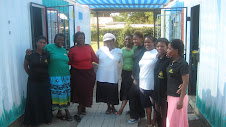
Isibindi means courage. The Isibindi Program has about 50 sites throughout South Africa located mostly in the black townships - often referred to also as "locations". Women from the townships are recruited and trained to be case workers who then go into homes of families who have requested their help in caring for children orphaned by AIDS. Most often the children are related in some way, though some are taken in my neighbors.

The help a case worker offers ranges from teaching about medicines and condoms to helping with home work. Advocacy is also a big part of their work in the legal, educational and even social arenas. There is emotional support for girls and women abused and raped by neighbors or family members. They will visit, travel with, sit with and fight for the women and children in their care.

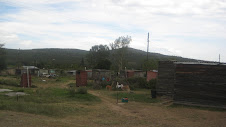
The squalor of these townships is appalling and the conditions under which the families live and these women do their work is heart breaking. Yet living in the townships they earn trust by making relationships not only with the clients but those watching to see how this program works - before they too request help.

Sisters Monica and Heidi (from the order of the Little Sisters of Jesus) have management oversight for three Isibindi sites and are formidable advocates in directing the program and raising funds to offset the meager support from the Easter Cape Province. They train managers who train and give support to the case workers. Their office is the mini-van they drive in hundreds of miles each week. A focal point for each site is a playground with classrooms made out of storage containers or corrugated metal. Around the yard are swings and a slide with tables and chairs in whatever shade can be found.

A new initiative is creating Safe Parks, expanding into the rural communities with other fenced in yards. These are supervised so children can play away from crushing chores, often abusive households, molestation or attacks. Since the heat can be oppressive, shade coverings are constructed. Bathroom facilities are corrugated steel out houses. As hard s it is for most of us to comprehend this level of poverty, these safe parks are a stride forward to give these children safe environments to have a childhood.

The Isibindi Program began approximately eight years ago and is growing out of the desperate need. Heidi and Monica started this program four years ago with 18 children. They now have over 1400 registered. There are 14 case workers and 5 managers. Each case worker has about 45 families they visit.

The staggering need would overwhelm most people. These women have a courage and conviction that dwarfs anyone I've ever met. Some told me stories of their lives and what led them to what they describe as their vocation. Rising from cultural conditions that keep women down, they found voices that freed them and they call out to other women with life giving hope.

As I was leaving I asked if I could take their picture. Not only could I, but they wanted to sing a song for me. I'm unable at this point to upload the video I took with my camera, but their voices sang out with strength and beauty. I was speechless and stood there in tears. When I finally could talk, I asked them if I could pray with them. They smiled wide and we held hands praying God's blessing on their work and the children they serve.

Friday, 20 March 2009

Feast of St. Cuthbert

Br. Robert asked me to preside at their daily Eucharist today. I packed my alb knowing I would preach and celebrate at the Cathedral, but it was an unexpected treat to be invited to celebrate the Eucharist for the brothers.

I didn’t know in advance that it was the feast of St. Cuthbert. It’s customary in churches who observe lesser feasts to read a synopsis of the saint prior to the Eucharist. As it was read it was my turn to chuckle silently at God’s sense of humor. St. Cuthbert lived in the seventh century AD and was a monk and Prior of Lindesfarne in the north of England. He went on to live the life of a hermit monk on an island, ultimately founding a monastery there as well. That island has become known through the centuries as Holy Island, one of my next destinations.
Time waxes and wanes. Since I have passed the midpoint of my visit to South Africa I’m more aware of time waning. The reading about Cuthbert reminded me that I’m called not to stay here, but move on. Still, there is a lot I will do and see here. There is still much to learn and soak in. But I’m mindful that in many ways our lives move from location to location in bitter sweet pace. I second guess myself thinking I should have spent all three months of the sabbatical in this wonderful place. Yet, if I had, I wouldn’t be able to spend time in other places meeting other people and experiencing other ways of living and praying. Ultimately choices get made and each is of great value.

We are guests in this life of all the places we visit and people we come to know. Time waxes and wanes in each place and relationship often without knowing the duration. It’s so important to relish each day for what it has to offer and each person for who they are. While being mindful of the movement of time and making plans to the next transition, we can’t let it rob us of the pleasure of finding God in any particular place at any particular moment.

Cuthbert may be on the horizon calling, but I’m still here now!

Thursday, 19 March 2009

Of Specks and Logs

“Why do you try to take out the speck that is in your brother or sister’s eye, when you have a log in your own?” (Mt. 7:4 )
While in Cape Town Clark and I had the opportunity to meet and talk with some white South Africans. It became clear to us that there is a wide spectrum of interpretation of the Apartheid years and those since. Their opinion of the Apartheid period is that is was a bad thing but that it was falling apart even before it was ended officially. They believed it was ended non violently and told us of the lack of information that white South Africans were given of the conditions and happenings in the townships. At times the conversation was tense and could have gone in a negative direction. We were left dumbfounded by the lack of concern or collective accountability for the obscenity of Apartheid. We were similarly struck by the complacency around the horrendous living conditions in current townships.
In later reflections, I had to swallow my indignation as I thought of the above biblical quote. I suspect Native Americans have their own reflection of the topic of Apartheid still in effect. Our history of slavery, Jim Crow, and active racism in society today is a shame we’ve made our peace with. Our general complacency that greets the horrendous living conditions of projects and unequal education in the US makes criticism of other countries border on hypocrisy.
Even moral outrage must be conducted in humility. Critique of another without self examination can be self righteous and empty. Jesus told them , “Take out the log that is in your own eye before you can take out the speck that is in your brother or sister’s eye.”

Wednesday, 18 March 2009

Robben Island


Thursday was dubbed “tourist day” and Br. Clark and I made our way up to Table Top Mountain via the gondola on a spectacular day to be treated to a magnificent view of Cape Town and the surrounding region. Since we were able to do this in the morning, we were able to catch the ferry to Robben Island in the afternoon. This island is best known as the location of the prison that held Nelson Mandela for 18 years. The other 9 years of his total imprisonment were in other locations.

Robben Island (the Dutch work for seals) was first a trading post, then a leper colony, a military site during the world wars and finally the prison for which it is best known today. The tour is in two parts, the first is a bus ride around the island with a talk about each phase of its history and the buildings that were added for them. The second part of the tour took place in the prison buildings. Whereas the bus tours are directed by younger South Africans, the tours of the prison buildings are given by former plitical prisoners. The impact of their pain and experience within these walls was conveyed in the quiet, yet forceful description of those years. Physical and psychological torture were employed routinely. Many broke, which was the intent. But those who survived were galvanized in their resolve to build a new South Africa that would have to rise from the old.

Having driven by and seen the lime quarry where many prisoners worked in searing heat and freezing cold, we learned that the cave along the far end was known among the prisoners as the “university” where leaders such as Nelson Mandela would debate and strategize while also taking time to teach the illiterate prisoners by drawing in the lime dust on the ground of the cave.

Despite the sounds of the birds and buses, there is a quiet on the island. A peace has descended on this place where healing is also happening. A location that housed those suffering from leprosy and later political prisoners is now a teaching place telling the story and uncovering the secret shame of this country. Most of the white residents of South Africa were given heavily censored information and kept ignorant of that island’s deeds. Part of the healing work involves not only the anger, bitterness and inequities of the Black and Coloured people abused through Apartheid, but the guilt and shame of the White people who lived side by side with them. It’s an immense task. But as the truth is being spoken, hope for that same healing grows.

These words are inscribed on a plaque in the prison yard: While we will not forget the brutality of Apartheid, we will not want Robben Island to be a monument to our hardship and suffering. We would want it to be a triumph of the human spirit against the forces of evil. A triumph of wisdom and largeness of spirit against small minds and pettiness; a triumph of courage and determination over human frailty and weakness; a triumph of the new South Africa over the old. (Ahmed Kathrada, imprisoned 26 years)

Saturday, 14 March 2009

Cape Town

My decision to go to Cape Town was made when I learned that my Seminary roommate was going to be there leading a retreat. We’ve been close friends almost 28 years and being this close in Africa made the trip a “must”.
Br. Clark joined the Franciscans a few years after we graduated and is now the Minister General which is the highest office in that order. It’s his role to visit each house and brother in the world once a year. No small task. Most people don’t know that the Episcopal church has monastic orders and they are relatively small communities, but they are strong and engaged in witness and ministry around the world. The diversity of members in any of the traditions (i.e. Benedictine, Franciscan, etc) makes uniformity a challenge. Having brothers in the US, England, Korea, Columbia, Papua New Guinea and the Solomon Islands makes his work challenging to foster a wider sense of community among the brothers and address the issues that are unique to each cultural setting. Like a microcosm of the worldwide Anglican communion, the brothers in different regions hold different views on sexuality and social witness. Tension can be creative or destructive depending on the commitment of the parties involved. For the Franciscans, their commitment to unity is a model for the rest of the church to work through our differences.
I tagged along with Clark’s official visits to Diocesan dignitaries and attended Eucharist at the Cathedral of Cape Town and later a Taize service. The Cathedral of St. George is a beautiful structure in a classic stone design whose newer windows draw in contemporary images of the church. Seeing the pulpit and chair from which former Archbishop Desmond Tutu preached against Apartheid had a deep effect on me. History was made here and for an important period of time this was the front lines of Christian witness. I’ve hard Bishop Tutu preach before and I imagined the quiet thunder of his voice reverberating from these stone walls to the furthest reaches of the world. Many in South Africa saw him as a terrorist and trouble maker. The world outside gave him a Nobel Peace Prize.

Monday, 9 March 2009

Egazini Outreach Project

“They shall beat their swords into plowshares…” (Isaiah 2:4) In 1819 the Xhosa tribe fought a combined army of Dutch and English and were driven out as they lost the battle. Engazini is the Xhosa word for this battle and it’s considered a turning point in South African history for the European settlers expanding into the country. The Joza Township was built for the Black South Africans on this site since it‘s well outside the commercial range of town. Placed in the corner of the township was a detention center during the Apartheid era called an Internal Stability Unit.
The building is a stark construction fit for it’s grim purpose. Since 2001, however a local group of artists have entered the space and use it to create art, sell their work on commission and stage dramatic performances. The bloody history of that site is a common theme of the wood carving, painted fabrics, and linocut prints. The artists also provide a prophetic voice for current events and conditions in modern South Africa. But most prevalent is the pride in the beauty of the land and their traditional ceremonies. The building itself has become a artistic canvass with a relief of historical references.
Art is healing. Creating beauty out of the rubble of unconscionable abuse is the ultimate triumph of the spirit. Art is the voice deeper than words to salve the pain deeper than words. The artists’ pride is not only in their craft but the strength of their people, as well as their courage and determination to overcome. Each work shines a light on the place where evil lived in secrecy and moral darkness. It makes sacred that which was profaned and witnesses that the deepest Spirit of God living in human frailty will overcome evil.

Sunday, 8 March 2009

The Monastic Hours

The monks of the Order of the Holy Cross are of the Benedictine tradition. St. Benedict began what became the order bearing his name in the early 500’s AD. He placed an emphasis on prayer, study, and work creating an order to the day, or Rule, that basically continues to the present. Benedict’s Rule became adapted by Monastic communities in later years.
The first community prayer is called Vigils and begins at 6:00am.The opening words of this service are from the psalms, “Lord, open our lips…” ending the great silence begun the night before. Breakfast at 7:15 is in silence. Lauds and the Eucharist have been combined and happen at 8:00am and talking is allowed after this service. The morning is to be used for personal devotion and study.
Noon prayers and lunch shift the day into work. Originally Benedictines were self sufficient communities with their own farms and services. Work was concentrated in doing what needed to be done to feed and take care of the essentials of the community as well as create the beautiful manuscripts for which monasteries were known. Today work involves local parish programs, social services or education. The monks here divide their time in the hospitality of the guest house they run as well as lead quiet days and retreats for individuals and groups. They also run an after school program for local children and youth to supplement a troubled public school system.
Vespers brings everyone back together at 5:30pm followed by supper and conversation. Compline at 8:00pm ends the day and begins the Great Silence, after which all go to their rooms or quietly read in the common rooms.
There is a gentle rhythm to the day that draws in both brother and guest. The schedule of services or “hours” as they are called take their names from the Latin words describing the time of day they occur. It sets the focus and maintains the pace of the day keeping God at the center and the chanting or recitation of the psalms the heartbeat of the monastic life.
Parishes that we’re used to follow a similar order of worship and yet each is very different in character. The same can be said for monastic houses. Even by its name Mariya uMama we Themba (Mary, Mother of Hope) this monastery’s commitment to the people of South Africa is evident in their multi lingual services, the worshippers they draw from the area and the work they do in education. White, Black and Coloured South Africans are welcome during the week but mostly join on Sunday at 9:00am in a beautiful reflection of the hope they each carry for a united South Africa gathered in love and service to God and each other.

Friday, 6 March 2009

Arrival

The plane left Newark as scheduled despite the snow on Monday Mar 2 at 8:30pm. Deacon Chris McCloud drove me to the airport and as she drove off, I knew again that I was on my own now. Boarding passes were easy. Security a breeze. I even found internet service in the airport after a long struggle, even on my new laptop! As of this writing it’s eluding me again - I had to borrow the monastery computer to make these entries. I prepared myself for what I knew would be a long trip.
The first leg was Newark to London’s Heathrow. The ten hour layover there was helped when I saw that two men who sat next to me were reading books related to ministry. In conversation I learned they are a father and son ministry team currently working in Birmingham Alabama, but on their way to Tanzania where the father was born. His family is still there and his brother is seriously ill. His son has never been and it seemed time to return for a visit. Although our African destinations were different, the layover time was similar and our conversations easily passed the time. Especially since I learned an important part of their ministry is healing. Traditional father and non-traditional son spanned experiences that I found fascinating. I shared about the ministry at St. Georges and my own traditional and non-traditional ideas about healing. This is the first in what is usually a lot of “coincidences” that emerge on a pilgrimage - as I have begun to term this sabbatical. Off to a good start!
The next stage was a ten hour flight to Johannesburg. By the time we touched down, over twenty four hours had passed and jet lag clearly arrived. Realizing I had a two hour layover I slowed down, until the size of that airport and the place of my next departure dawned on my foggy brain. Since it was the first stop in Africa I had to pick up my previously checked bag, go through customs and re-check it as well as train for a marathon in covering the large distances between each of these checkpoints. I only made the next flight thanks to an observant check in clerk. She saw the time and allowed those of us going to Port Elizabeth to form a new and much shorter line.
When this third plane landed I wasn’t sure what day it was, or the time, nor did I care. I was so glad to be done I didn’t even care which city I was in. If it was wrong, I’d make do! I’d reserved a car and grimaced at my next challenge in this travel gauntlet. (I never cared for the Amazing Race reality shows, but my sympathy for their obstacles might lead me to give those shows a second chance.) It’s now 35 hours since I left Newark. I’m tired, disoriented, intestinally distressed from the airline food, and aware that my reflex response is not up to snuff. When I paused to figure out how to pick up a glass of water, my long lost self awareness was getting concerned. It was at this point that I discovered my rental car had the steering wheel on the right side of the dash, and that the stick shift (stick shift??) was on the left of the driver. This stunning realization gave way to the panic of never having driven this type before. Then the dread of driving on the opposite side of the street rose as well.
During the two hour drive, I was really feeling the effects of the trip, missed the turn off for the monastery and went into Grahamstown proper. I wasn’t in the mood to enjoy it’s quaint appearance and turned around to try again. New Jersey, it seems, is not the only place that omits key street signs. Finding the correct turn, I was presented with three road options. One led to the SPCA (Society for the Prevention of Cruelty to Animals) facility, the next was to the maximum security penitentiary facility, and the third apparently - and thankfully- was the one I needed. Even as tired as I was, there was a theme here whose dots I did not want to connect. The tar road became gravel, the last building was a good distance behind, and the hill before me became a challenge to my left handed stick shifting ability.
Like a miracle a sign finally appeared humbly stating “UMariya uMama weThema Monastery.” The beauty and simplicity of the buildings and grounds say “welcome” and extend Christ’s promise of rest to those who are weary. At first I didn’t know where to go and identified what I reasoned to be the guesthouse. I was greeted by a fellow guest who steered me to the Guestmaster’s empty office. My wait wasn’t through, but at least I was in the right place. I went to the chapel and sat, prayed and snoozed. Movement in the garden some time later revealed a brother and I was directed to my room. As we passed the guest I had spoken to in the hallway, the brother greeted him as Bishop, whereas before he had only given me his name. One of the nice things about monastic retreat is the extended simplicity and humility of those who often visit. Formalities are checked at the door and we are all fellow seekers of God in these places.
The main business of a monastery is hospitality. The provide a “place apart” for clergy and lay people to be restored for the work God has called them to do. So far I’ve met several guests whose ministries I will come to know better and volunteer to help. Orphanages and schools are the top priority so far. In a country still struggling so hard to overcome it’s past, children suffer the most and those who work to help them need time to rest and gather strength to continue their work. It is a beautiful corner of the world filled with challenge, hope and strength. There is violence and brutality as well, yet with God all things are possible and it God to whom we turn at such times.
High on this hill the morning wind is fierce. Vigils (Morning Prayer) is at 6:00am and a verse from a psalm mentioned the voice of God as loud and thunderous. With the wind outside it seemed very true. I thought at that moment, that I’ve arrived and I’m listening.

Why Aelred's Garden?

I thought of this name for my blog for two reasons. The first is that St. Aelred is the name of my ordination day Saint, and I like gardens.
In 1985 the Bishop of Rhode Island chose January 12 for me to be ordained a priest - the earliest convenient Saturday in his schedule. Recent Seminary grads are usually ordained Deacons at their home Cathedral in June. The ordination to the Priesthood occurs no less than six months later. I was ordained Deacon with three others on June 23, 1984 and it was unlikely that I would become a Priest two days before Christmas so January 12 it was. The calendar of Saints revealed that St. Aelred was also celebrated that day. Saints are remembered on the date of their deaths, or more importantly, birth to everlasting life.
I didn’t know the name of Aelred prior to my ordination plans but what I found out made me quite fond of him. Born in 1110 AD in northern England he became a monk at a young age and over the years the Abbot of Riveaux, a large monastery also in the north of England and important in the early history of the Church of England. Aelred was a scholar and writer as well as Abbot and at the urging of St. Bernard of Clairveaux wrote what became an enduring work called “Spiritual Friendship”.
This book, short by modern standards, plumbs the depth of friendship from a Christian, spiritual point of view. Far from being didactic, it’s touching, insightful and ultimately revealing. Taken together with his written instructions as Abbot and published letters, he departed from other monastic traditions and allowed monks to explore friendships with each other. Normally discouraged or even prohibited, deep friendships were suspect as being possibly sexual or at the very least divisive in community life if conflicts arose between the friends themselves or the friends against the others in community. Aelred saw the deep nature of friendship as being able to transcend such conflicts, and used the example of Jesus’ friendship with His apostles - and by extension Jesus’ friendship with the believer and even further, the church. Our earthly friendships are reflections of the divine friendship.
Aelred’s letters are sometimes directed to his particular friend. Modern scholars read what we would describe today as a gay relationship into these letters. While love between male friends doesn’t’ have to be gay, it’s plausible that the emotions and intimate love between Aelred and his friend was that of lover and beloved. Given Aelred’s writings and today’s controversies, Aelred has been given the unofficial title of “Gay Saint” and adopted by gay religious organizations as a patron saint. Another reason to love Aelred and what a nice coincidence for me as a gay priest to share his feast day! I also refer to him as Patron Saint - one who is important and worthy of emulating.
As for gardens - they are beautiful, peaceful and invite the visitor to slow down, relax and even go deeper into meditation. This sabbatical is a time for me to enter that garden in this point of my ordained life. I’ve chosen places that are far flung in geography and tradition. I want to experience faith, spirituality and friendship with God in as many human contexts as I can. A garden is made up of more than one flower for the beauty of the many. Faith is like that for me and the experience is wonderful. God is in more than one tradition and place and friendships with God and people call me deeper and deeper into the mystery of his love.
That’s why this blog and the spiritual theme of this trip is called Aelred’s Garden!